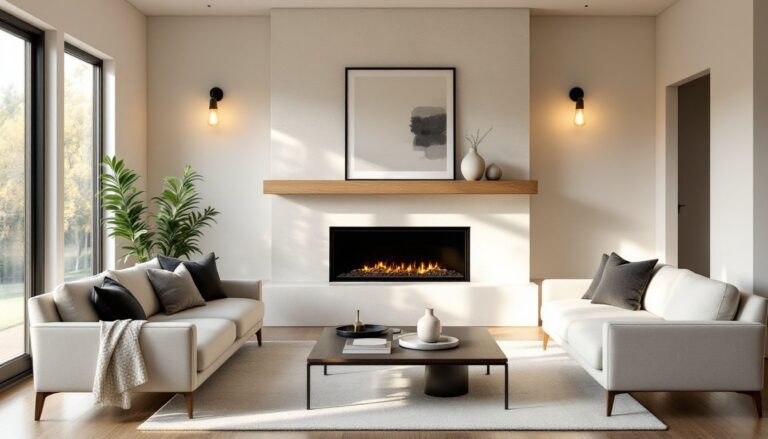
The family room is where life happens, movie marathons, board game battles, assignments sprawl, and the occasional nap. It’s the hardest-working room in the house, and its walls should reflect that. Bare walls feel unfinished, but overdone ones create visual chaos. The right wall decor balances personality with function, making the space feel pulled together without sacrificing comfort. Whether you’re working with builder-grade drywall or tackling accent walls, these practical ideas help transform flat surfaces into something that actually feels like home.
Table of Contents
ToggleKey Takeaways
- Family room wall decor balances personality with durability, using treatments that absorb sound, define spaces, and withstand daily wear from kids and foot traffic.
- Gallery walls work best with proper spacing of 2-3 inches between frames and centered at 57-60 inches from the floor, while seasonal rotation keeps the design fresh without major overhauls.
- Large-scale art pieces and oversized mirrors provide impact while serving practical functions like covering drywall imperfections or enhancing natural light in your family room design.
- Textured wall solutions like shiplap, wood plank accents, woven hangings, and 3D panels add depth, improve acoustics, and transform flat walls into engaging focal points.
- Functional wall decor such as floating shelves, pegboards, and wall-mounted cabinets maximize storage in tight spaces while contributing to the overall aesthetic of the room.
- Budget-friendly DIY projects—from painted canvas art ($30-50) to geometric tape treatments—prove that professional-looking family room wall decor doesn’t require expensive renovations.
Why Family Room Wall Decor Matters
Family rooms take a beating. They handle foot traffic, kid chaos, and the wear that comes with daily use. Wall decor does more than fill space, it absorbs sound, defines zones, and sets the mood without competing with sectionals and entertainment centers.
Unlike formal living rooms, family rooms need decor that’s durable and forgiving. Skip fragile glass frames at toddler height. Choose pieces that can handle the occasional soccer ball or can be easily rehung if knocked crooked.
Wall treatments also solve practical problems. Large-scale art covers patched drywall or outdated paneling. Shelving adds storage without eating floor space. Textured pieces like woven hangings or wood panels improve acoustics in open-plan layouts where sound bounces off hard surfaces.
Think of walls as the fifth surface, they’re as important as flooring or furniture but often get the least attention during renovations. Addressing them turns a functional room into one that feels intentional.
Gallery Wall Arrangements That Tell Your Story
Gallery walls work in family rooms because they’re flexible. Start with a central anchor piece, typically the largest frame, then build outward. Use painter’s tape on the wall to mock up placement before driving nails. This prevents the Swiss cheese effect from multiple anchor holes.
Frame spacing: Keep 2-3 inches between frames for a cohesive look. Closer feels cramped: wider reads as disconnected.
Mix frame sizes but stick to a limited color palette. All black frames create unity even when art styles vary. White or natural wood frames lighten the wall but show dust faster in high-traffic rooms.
Hang frames so the center of the grouping sits at 57-60 inches from the floor, standard gallery height that works for most ceiling heights. For walls above sofas, leave 6-8 inches between the furniture top and the bottom frame edge.
Use a level and measure from the ceiling down rather than the floor up, since floors aren’t always level in older homes. Picture-hanging strips work for lightweight frames under 5 pounds: anything heavier needs anchors in drywall or screws into studs.
Rotate photos or prints seasonally to keep the wall fresh without a full redesign. Clip frames or magnetic boards make swaps easier than traditional glass frames.
Statement Pieces and Large-Scale Art
One oversized piece simplifies decision-making and makes a bigger impact than a cluster of small frames. Large-scale art works especially well on walls behind sectionals or opposite the main seating area.
Sizing guidelines: For walls above furniture, choose art that spans two-thirds to three-quarters of the furniture width. A 96-inch sofa pairs well with art in the 60-72 inch range.
Canvas prints are lighter and easier to hang than framed pieces. Stretcher bars (the wooden frame inside the canvas) should be at least 1.5 inches deep for a substantial look. Thinner canvases feel cheap.
Metal prints offer durability in family rooms, they’re scratch-resistant and easy to clean. They need fewer anchor points than framed glass but still require wall anchors rated for the weight.
Oversized mirrors function as both decor and light enhancers. Position them across from windows to bounce natural light deeper into the room. Avoid placing mirrors where they’ll reflect TV screens, which creates distracting glare.
For DIY options, architectural salvage like old windows, shutters, or barn doors mounted as wall art bring texture and scale without the cost of custom framing. Sand and seal wood pieces to prevent splinters and make cleaning easier.
Functional Wall Decor for Family Rooms
Functional decor pulls double duty, which matters when square footage is tight. Floating shelves display books and plants while hiding cable boxes and routers. Install them into studs using 5/16-inch lag bolts for shelves that’ll hold real weight, 20-30 pounds per bracket.
Pegboards aren’t just for garages. Painted pegboard panels with wood dowels create customizable storage for kids’ artwork, remote controls, or headphones. Use 1/4-inch pegboard and space it 3/4 inch off the wall with spacers so hooks fit properly.
Cork tiles or fabric-covered boards turn wall sections into pinboards. These are especially useful in homes where cluttered schedules or artwork for organizing household items help maintain order, much like storage room organizing systems do behind closed doors.
Wall-mounted cabinets with doors hide clutter while adding visual interest. Shallow cabinets (6-8 inches deep) work for media components without protruding into walkways. Make sure to hit studs or use toggle bolts rated for at least 50 pounds per anchor point.
Command strips work for lightweight functional pieces like mail organizers or key hooks, but read the weight limits. Most handle 3-5 pounds: heavier items need proper anchors.
Texture and Dimension: Beyond Flat Art
Flat art feels one-dimensional in rooms with lots of soft furnishings. Textured wall decor adds depth and absorbs sound, a bonus in rooms with hardwood or tile floors.
Wood plank accent walls create warmth without paint. Use 1×6 or 1×8 pine boards (actual dimensions: 3/4″ x 5.5″ or 3/4″ x 7.25″) installed horizontally or in herringbone patterns. Nail into studs with 2-inch finish nails and fill holes before staining. Allow boards to acclimate indoors for 48 hours before installation to prevent warping.
Woven wall hangings (macramé, rattan, or jute) soften hard surfaces and work in casual spaces. Mount them on a dowel rod secured with small L-brackets. These pieces collect dust, vacuum them monthly with a brush attachment.
3D wall panels made from MDF or PVC add architectural interest. Standard panels are 2×2 feet and install with construction adhesive and finish nails. Paint them the same color as the wall for subtle texture, or use contrast colors for drama. Many design inspiration sources showcase how textured panels transform flat spaces into dimensional focal points.
Metal wall sculptures work in modern or industrial-styled family rooms. Steel pieces need anchors rated for their weight, some decorative grilles or geometric panels exceed 15 pounds. Check the back for pre-drilled mounting holes.
Shiplap remains popular for good reason: it’s relatively easy to install and covers imperfect drywall. Use nickel-gap shiplap spacers for consistent reveals between boards. Prime and paint before installation to avoid visible gaps if boards shrink.
Budget-Friendly DIY Wall Decor Projects
Large-scale abstract art: Buy a pre-stretched canvas (24×36 inches or larger) and acrylic paint. Tape off geometric sections, paint in blocks of 2-3 coordinating colors, and remove tape while paint is still slightly wet for clean lines. Total cost: $30-50.
Frame upgrade: Thrift store frames get new life with spray paint. Use a bonding primer for slick surfaces, then apply 2-3 light coats of paint. Let cure for 48 hours before hanging. Match all frames to one finish for a cohesive gallery wall.
Fabric panels: Stretch decorator fabric over foam insulation boards (1-inch thick, cut to size) and secure with hot glue on the back edges. These lightweight panels lean against walls or hang with Command strips. They add color, pattern, and sound absorption. Cost: $15-25 per panel.
Floating shelf from construction lumber: Cut a 2×8 board (actual: 1.5″ x 7.25″) to desired length. Sand smooth and stain or paint. Mount with heavy-duty floating shelf brackets screwed into studs. A 48-inch shelf costs under $20 in materials.
Geometric wall treatment: Use painter’s tape to create triangles, hexagons, or stripes directly on the wall. Paint inside the tape with a contrasting color. Remove tape at a 45-degree angle while paint is tacky. This technique requires patience but costs only the price of paint, about $35 per gallon, which covers roughly 400 square feet.
Many DIY wall projects demonstrate that professional-looking results don’t require professional budgets, just careful prep and patience.
Conclusion
Family room walls should work as hard as the room itself. Whether adding a gallery wall, installing floating shelves, or tackling a textured accent wall, the goal is creating a space that feels finished without feeling fussy. Balance personality with durability, and don’t be afraid to use walls for storage as much as decoration. More inspiration for transforming living spaces can be found at platforms focused on home design, where practical meets visual appeal. Measure twice, use proper anchors, and the walls will hold up to years of family life.