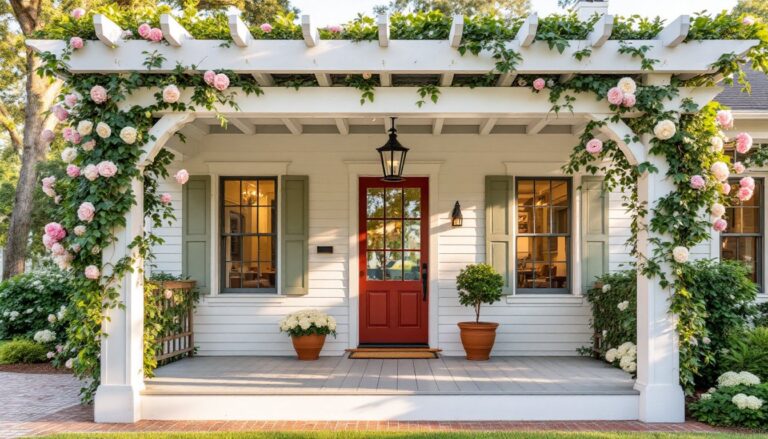
A pergola on the front porch isn’t just decorative, it’s a strategic upgrade that frames the entry, adds dimension, and creates a welcoming transition from sidewalk to front door. Unlike backyard pergolas built for lounging, a front porch structure serves as architectural punctuation. It defines the approach, provides a surface for climbing plants or pendant lights, and can turn a bland façade into a memorable entry. Whether working with a narrow stoop or a deep wraparound porch, choosing the right pergola style involves balancing material durability, architectural compatibility, and local permitting rules.
Table of Contents
ToggleKey Takeaways
- Front porch pergola ideas transform bland entryways into memorable focal points by adding architectural interest, vertical dimension, and a welcoming transition from sidewalk to door.
- Wood pergolas offer timeless elegance with natural aesthetics, while metal and vinyl alternatives provide low-maintenance durability—choose based on your home’s style and climate conditions.
- A well-designed front porch pergola can add 3–5% to your home’s appraised value while keeping the structure proportional to avoid overwhelming a narrow façade.
- Climbing plants like wisteria, clematis, and hydrangea paired with strategic lighting—string lights, pendant fixtures, or LED uplights—create layered curb appeal and evening ambiance.
- Before installation, verify local permitting requirements, as freestanding pergolas under 120 square feet typically don’t need permits, but attached structures usually do.
Why Add a Pergola to Your Front Porch?
Front porch pergolas create vertical interest on homes with flat rooflines or unadorned entries. They draw the eye upward, making single-story houses feel taller and adding shadow play that breaks up monotonous siding or brick.
From a functional standpoint, a pergola provides partial shade, enough to cool the entry by 5–10°F on sunny afternoons without blocking natural light from interior rooms. The open-rafter design won’t trap heat like a solid porch roof, which matters if the front door faces south or west.
Pergolas also serve as a framework for layered design. Homeowners can train wisteria, clematis, or climbing roses over the beams, hang pendant lights or lanterns, or drape string lights for evening curb appeal. That flexibility keeps the structure from feeling static.
Permit requirements vary by jurisdiction. Most municipalities treat freestanding or post-supported pergolas under 120 square feet as accessory structures that don’t require a permit if they’re not attached to the house. Once you anchor a pergola to the home’s framing or exceed that square footage threshold, expect to pull a permit and submit stamped drawings in many areas. Check local building codes before ordering materials.
Finally, a well-designed front porch pergola can add 3–5% to a home’s appraised value, especially in neighborhoods where curb appeal drives first impressions. It signals that the homeowner invests in exterior upkeep, which reassures buyers.
Classic Wood Pergola Designs for Timeless Elegance
Wood remains the most popular pergola material for front porches because it’s easy to cut, stain, and customize on-site. Pressure-treated pine is the budget choice, expect to pay $2–$3 per linear foot for 4×4 posts and 2×6 rafters. It accepts stain well after a few months of weathering, but it will warp and check over time without annual sealing.
Cedar and redwood are naturally rot-resistant and stable, with tighter grain and fewer knots. Cedar runs $6–$9 per linear foot: redwood can hit $12–$15 depending on grade and region. Both weather to a silver-gray patina if left unsealed, which suits craftsman and cottage-style homes. For maintaining the original honey or amber tone, plan to reapply penetrating oil or semi-transparent stain every 18–24 months.
Classic wood pergola designs feature 4×4 or 6×6 posts, 2×6 or 2×8 beams, and 2×4 rafters spaced 12–16 inches on center. Rafter tails often get decorative end cuts, simple bevels, curves, or notched profiles, that add visual detail without complicating the build. Many DIY woodworking plans include templates for these cuts.
For front porch applications, keep the pergola’s footprint proportional: a structure spanning more than two-thirds of the porch width can overwhelm a narrow façade. On deeper porches (8 feet or more), consider a double-beam design with cross rafters to break up the span and prevent sagging.
Safety note: When cutting treated lumber, wear a dust mask rated for fine particles and safety glasses. The copper-based preservatives in pressure-treated wood are irritants.
Modern Metal and Vinyl Pergola Options
Powder-coated aluminum pergolas offer low maintenance and clean lines. They won’t rot, warp, or require seasonal sealing, making them ideal for homeowners who want curb appeal without upkeep. Aluminum kits typically come with pre-drilled posts and snap-together beam brackets, which speeds installation but limits customization. Expect to pay $1,200–$2,500 for a prefab 8×10-foot aluminum pergola, not including installation.
Aluminum’s main drawback is flex. Posts thinner than 4×4 inches (actual dimensions) can feel flimsy on structures over 10 feet wide unless cross-braced. For front porch use, look for models with internal steel reinforcement in the posts and beams.
Steel pergolas, either welded or bolted, are the most robust option. A powder-coated steel frame can support heavier loads, such as a fabric canopy or thick climbing vines, without deflection. Steel is also the go-to material for contemporary designs with slim profiles and long cantilevers. The tradeoff: steel is expensive ($2,500–$5,000 for a custom 8×12-foot structure) and requires professional fabrication and installation in most cases.
Vinyl (PVC) pergolas mimic the look of painted wood without the maintenance. They’re hollow extrusions filled with aluminum or wood inserts for strength. Vinyl won’t splinter, crack, or need painting, and it holds up well in humid climates. But, vinyl can yellow in intense sun and may become brittle in extreme cold (below 0°F). For regions with moderate climates, vinyl is a solid middle-ground option at $1,500–$3,000 installed.
When comparing metal and vinyl to wood, consider the aesthetic: metal and vinyl suit modern, coastal, and mid-century home styles, while wood feels more organic and traditional. If the home’s trim, railings, or columns are wood, a wood pergola usually integrates more seamlessly.
Pergola Styles to Match Your Home’s Architecture
Farmhouse and Cottage-Style Pergolas
Farmhouse pergolas lean on rustic details: chunky posts (6×6 nominal, which measure 5.5×5.5 inches actual), exposed joinery like mortise-and-tenon or half-lap joints, and natural wood tones. White or off-white painted finishes are equally common, especially when the home’s trim is painted.
For cottage-style homes, scale down the proportions. Use 4×4 posts and 2×4 rafters with decorative end cuts, scalloped or gently tapered profiles add charm without looking overdone. Climbing roses, hydrangeas, or wisteria trained over the rafters reinforce the garden-forward aesthetic that defines cottage design. Many Southern porch designs emphasize this layered, plant-integrated approach.
Wrap the base of each post with trim boards or a boxed plinth to match the porch’s column or railing details. This grounds the pergola visually and ties it to the existing architecture.
Contemporary and Minimalist Pergola Designs
Contemporary pergolas prioritize geometry and negative space. Expect flat-top beams with no rafter tails, posts set flush with the porch edge, and monochromatic finishes, matte black, charcoal gray, or natural cedar left to weather.
Minimalist designs often use steel or aluminum with thin cross-sections (2×4-inch or 3×3-inch posts) to reduce visual weight. Cantilevers, beams that extend beyond the posts, create a floating effect and work especially well on modern homes with deep eaves or flat rooflines.
For plant integration, contemporary pergolas favor architectural greenery: clipped ivy, trained espalier, or potted ornamental grasses rather than sprawling flowering vines. The plant material becomes a controlled design element rather than a softening layer. Homeowners seeking modern outdoor spaces often incorporate this restrained plant palette.
Lighting is critical in minimalist pergolas. Recessed LED strips along the underside of beams or slim pendant fixtures hung at varying heights add drama after dark without cluttering the structure. Use a dimmer to adjust brightness based on the time of day.
Adding Functionality: Lighting, Plants, and Decor Ideas
Lighting: Pergolas provide natural anchor points for overhead lighting. String lights (also called bistro lights) are the easiest install, use screw-in cup hooks rated for outdoor use and drape 14- or 16-gauge wire between rafters. For a cleaner look, run the wiring along the top of beams and secure with staples or conduit clips.
Pendant lights work well on deeper porches where head clearance isn’t an issue. Hang fixtures 6.5–7 feet above the porch floor to avoid head strikes. Hardwired installations require running 14/2 or 12/2 NM-B cable through the attic or wall cavity, which may need a permit and should follow NEC guidelines for wet locations (use weatherproof boxes and GFCI protection).
For ambient lighting, consider low-voltage LED uplights installed at the base of each post. They highlight the structure’s vertical lines and create a soft glow without glare.
Plants: Choose climbing plants based on sun exposure and maintenance tolerance. Wisteria grows aggressively (up to 10 feet per season) and produces heavy, fragrant blooms, but it requires annual pruning to prevent it from tearing apart the pergola. Clematis is less aggressive, blooms repeatedly, and offers dozens of color options.
For low-maintenance options, climbing hydrangea tolerates partial shade and requires little pruning once established, though it takes 2–3 years to start climbing. Trumpet vine thrives in full sun and attracts hummingbirds, but it spreads via underground runners, plant it only if you’re willing to manage its growth.
Install galvanized wire or jute rope between rafters to guide young vines. Avoid using plastic zip ties, which degrade in UV light and can girdle stems as the plant grows.
Decor: Keep front porch pergola decor simple and weather-resistant. Hanging planters (use S-hooks rated for 15+ pounds to avoid sagging), outdoor-rated fabric curtains on the sides for privacy, or a single statement piece like a vintage lantern or metal wall art work well. Avoid overcrowding the structure, front porches are transition zones, not living rooms. The goal is to enhance the entry, not distract from it.