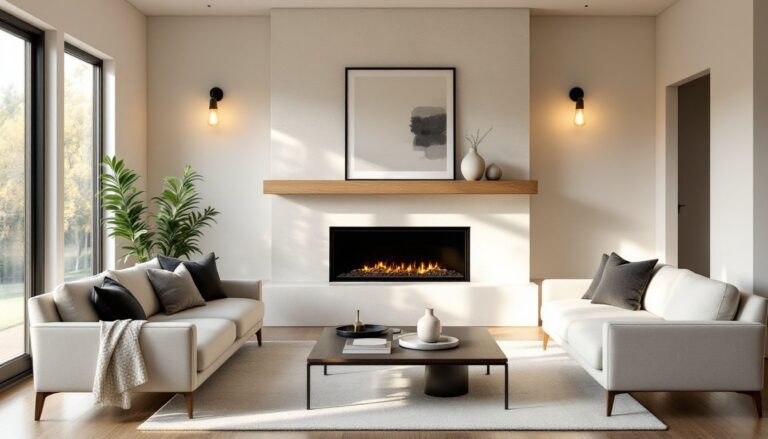
A fireplace surround isn’t just a protective barrier, it’s the focal point of your living room. The right tile choice transforms a builder-grade firebox into architectural detail worth gathering around. Whether you’re updating a 1970s brick horror or building new, tile offers durability, heat resistance, and design flexibility that paint and wood can’t match. This guide walks through proven tile patterns, material choices, and layout strategies that work for both gas and wood-burning installations.
Table of Contents
ToggleKey Takeaways
- Fireplace tile surround designs offer superior durability and heat resistance compared to paint or wood, making them ideal for both active fireplaces and decorative installations across various styles.
- Popular fireplace tile surround ideas range from classic white subway tiles and marble finishes to modern large-format porcelain and bold statement pieces like black tile or patterned encaustic cement.
- Budget-friendly ceramic and porcelain tiles cost $2–5 per square foot, while handmade zellige or marble options range from $8–30 per square foot, offering flexibility for any renovation budget.
- Tile layout, grout width, and color dramatically transform the visual impact—vertical stack bond elongates surrounds, while contrasting grout emphasizes the pattern and clean geometry defines modern spaces.
- Natural stone tiles like slate and travertine add rustic texture and unique veining but require periodic sealing, especially near active fireplaces burning wood.
- Proper installation demands a flat substrate and attention to grout type—standard cement-based grout works for most surrounds, while tight 1/16-inch joints with rectified tiles create seamless, gallery-like finishes.
Why Tile Makes the Perfect Fireplace Surround Material
Tile beats nearly every other surround material when it comes to the specific demands of fireplace installations. Porcelain and ceramic tile handle heat without warping, cracking, or off-gassing, critical when you’re dealing with surfaces that can reach 200°F or higher on active fireplaces. Natural stone like marble, granite, and slate add similar thermal performance with unique veining and color variation.
Maintenance is straightforward. Soot, ash, and creosote wipe clean from glazed surfaces with basic household cleaners. Grout requires periodic resealing (typically every 1-2 years), but that’s a 30-minute job, not a renovation. Compare that to painted drywall that yellows and stains, or wood mantels that require constant vigilance around ember strikes.
Installation flexibility matters, too. Tile works over existing brick, drywall, cement board, or directly on masonry. It accommodates irregular wall planes better than large stone slabs and costs significantly less. A basic ceramic subway tile runs $2-5 per square foot: handmade zellige or encaustic cement tile pushes $15-30 per square foot, giving a wide range to fit any budget. Code compliance is simpler, most jurisdictions require noncombustible materials within 6-12 inches of the firebox opening, and tile checks that box without requiring engineered clearances.
Classic Fireplace Tile Surround Styles
Traditional doesn’t mean boring. Classic tile patterns bring visual interest without competing with your furniture or artwork.
White or off-white field tile in simple stack bond or running bond layouts let the fire itself remain the star. Pair with a wooden mantel in walnut or oak for warmth, or keep it crisp with a painted MDF shelf. This approach works especially well in Colonial, Craftsman, or transitional interiors where you want the surround to support the architecture, not dominate it.
Marble tile in honed or polished Carrara, Calacatta, or Statuario finishes delivers timeless elegance. Use large-format tiles (12×24 or bigger) with minimal grout lines for a more seamless, slab-like appearance at a fraction of the cost. Book-matching tiles on either side of the firebox creates symmetry that feels intentional. Expect to pay $8-20 per square foot for natural marble tile, plus another $3-6 per square foot for professional installation if you’re not comfortable with wet-saw cuts and lippage control.
Subway Tile Patterns and Layout Options
Subway tile’s 3×6-inch format is a workhorse for fireplace surrounds, but layout makes all the difference. Running bond (traditional brick pattern, offset by half) is the default, clean, familiar, safe. Vertical stack bond elongates the surround and suits contemporary spaces. Herringbone adds movement and complexity: it requires more cutting and planning, so budget extra time and about 10-15% more tile for waste.
Grout width and color drastically change the look. 1/16-inch unsanded grout in a matching color makes the tile pattern recede: 1/8-inch contrasting grout (charcoal with white tile, for example) emphasizes the grid. For active wood-burning fireplaces, use heat-resistant grout and skip epoxy grout, it doesn’t handle thermal expansion as well as standard cement-based formulas. When considering different fireplace upgrade ideas, subway tile remains a versatile and budget-friendly option.
Modern and Contemporary Fireplace Tile Ideas
Modern surrounds lean into clean geometry, monochromatic palettes, and oversized formats. Think less grout, more uninterrupted surface.
Large-format porcelain tile in 24×48 or even 36×36 sizes creates a sleek, gallery-like backdrop. Rectified edges (precision-cut, perfectly square) allow for 1/16-inch grout joints that nearly disappear. Colors run from matte black and charcoal to warm concrete grays and soft taupes. Porcelain also comes in wood-look and stone-look finishes if you want texture without the maintenance of real wood or the weight of natural stone.
Solid-color zellige or handmade tile in saturated hues, deep teal, charcoal, sage green, or terracotta, works when you want the surround to be the room’s statement piece. The slight irregularities in handmade tile add depth that machine-made products can’t replicate. Pair with minimal or no mantel to keep the focus on the tile itself.
Concrete or cement tile brings an industrial edge. These are porous and require sealing, especially near an active firebox, but the matte finish and subtle pattern options (geometric, encaustic, terrazzo) fit loft-style or Scandinavian-inspired interiors. If you’re planning a larger remodel, resources like Bob Vila offer project guides for coordinating tile work with other home improvements.
Metal tile, stainless steel, brushed brass, or copper, is an unconventional but code-compliant choice for gas fireplaces with lower surface temps. It reflects light, feels ultra-modern, and wipes clean instantly. Not recommended for wood-burning units due to heat conductivity and potential discoloration.
Rustic and Natural Stone Tile Surrounds
Natural stone delivers texture and color variation that no manufactured product can replicate. Each piece is unique, so expect tonal shifts and veining, that’s the appeal.
Stacked stone ledger panels (thin slices of stone glued to a backing sheet) install faster than individual stones and create a three-dimensional, textured surface. Quartzite, slate, and travertine are common options. The look is inherently rustic, so it pairs well with reclaimed wood mantels, log home interiors, or mountain-style architecture. Be ready for irregular surfaces, plan for shimming and extra thinset mortar to account for varying stone thicknesses.
Slate tile in larger formats (12×12 or 16×16) offers earthy tones, charcoal, rust, green, and purple, often within the same tile. It’s durable, heat-resistant, and naturally slip-resistant (useful if you extend the tile to a hearth pad). Slate does require sealing to prevent staining, especially if you burn wood and deal with soot.
Travertine in tumbled or honed finishes brings warm beiges, tans, and ivories with natural pitting and texture. It’s softer than granite or slate, so avoid it in high-traffic hearth areas where edges might chip. Fill larger voids with matching grout or epoxy filler before installation to avoid dirt traps.
Limestone and sandstone are other natural options, though both are more porous and require diligent sealing. They suit traditional or cottage-style homes but need more maintenance than porcelain or ceramic.
Bold and Dramatic Tile Choices for Statement Fireplaces
If your fireplace is the room’s anchor, make it count. Bold tile turns a functional feature into a design moment.
Black tile, matte, glossy, or textured, creates instant drama. Large-format black porcelain with minimal grout lines feels modern and sophisticated. Pair with a contrasting white or light oak mantel to prevent the surround from swallowing the room. Black zellige or glossy subway tile adds reflectivity and movement: the glaze catches firelight in a way matte finishes don’t.
Patterned encaustic cement tile brings color, geometry, and Old-World charm. Moroccan, Spanish, and Mediterranean-inspired patterns work in eclectic or bohemian spaces. Because cement tile is porous and requires sealing, it’s better suited to gas fireplaces or decorative installations than active wood burners. Plan your layout carefully, these patterns have a strong visual rhythm, and misalignment is obvious.
Metallic or iridescent glass tile reflects light and adds shimmer. Use as an accent band within a neutral surround or go full coverage for maximum impact. Glass tile is noncombustible and easy to clean, but it shows water spots and fingerprints, so keep a microfiber cloth handy.
Bookmatched marble or quartzite slabs aren’t tile per se, but if budget allows, they deliver unmatched luxury. Mirrored veining on either side of the firebox creates symmetry that feels intentional and high-end. Fabrication and installation require a stone pro, and costs start around $50-100 per square foot installed. When budgeting for high-impact projects, platforms like ImproveNet provide cost estimates and contractor referrals.
Choosing the Right Tile Size, Shape, and Layout
Tile size and layout directly affect how your surround reads in the space. Bigger isn’t always better, and pattern can either enhance or fight your room’s proportions.
Small-format tiles (mosaics, penny rounds, 3×6 subway) add texture and visual interest. They work well on narrow surrounds or when you want a handcrafted, detailed look. Downside: more grout lines mean more maintenance and longer installation time.
Medium-format tiles (6×6, 8×8, 6×12) strike a balance. Easier to install than mosaics, they still offer pattern flexibility. Hexagons, diamonds, and arabesque shapes fall into this range and suit transitional or eclectic styles.
Large-format tiles (12×24, 24×24, and larger) minimize grout and create a seamless, modern appearance. Installation requires a flat substrate, any dips or humps in the wall will telegraph through large tiles as lippage (uneven edges). Use a high-quality thinset with good coverage and consider a tile leveling system.
Layout orientation matters. Vertical stacking elongates a low ceiling: horizontal patterns widen a narrow wall. Diagonal layouts add energy but increase cutting and waste, budget 15-20% extra tile. For fireplace surrounds that extend floor-to-ceiling, consider a layout change at the mantel height to break up the expanse and add visual interest.
Grout joint width: Rectified tiles allow tight 1/16-inch joints: most field tiles need 1/8-inch. Natural stone with irregular edges may require 1/4-inch or wider. Unsanded grout is for joints under 1/8-inch: sanded grout is for anything larger. Always use a grout that matches or exceeds the tile’s heat rating, standard grout is fine for most fireplace surrounds, but high-temp grout is available if you’re installing directly around an insert or firebox opening.